Books
arrow_backBack

Already on your shelf

5 similar books you own: read these first?

Editions & prices

FormatISBNPublisher price
Ebook 9780197800300 —
Print 9780197800270 —

About this book

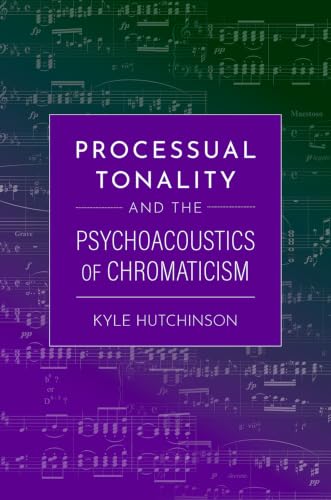
Abstract This book is a study of chromatic harmony and functional relationships in late nineteenth- and early twentieth-century tonal music (ca. 1860–1930). It includes examples from works by Schumann, Hensel, Chopin, Wagner, and Brahms, but its theoretic focus is primarily composers of subsequent generations whose harmonic practices are less routinely studied: Franck, Zemlinsky, both Gustav and Alma Mahler, the early tonal works of Schoenberg, as well as the late music of Richard Strauss and the music of Florence Price. The methodology engages the question of how to model a theory of tonal-functional relationships when the sounds heard signal specific diatonically conditioned expectations, but those expectations ultimately fail to coalesce. In other words, is it possible to circumnavigate the ways in which tonal conditioning has corralled the psychoacoustic patterns involved in how we listen to, perceive, and process harmonic relationships in analytic spaces? Responding to these issues, this book develops a theory of processual tonality. Processual tonality involves recognizing that harmonic perception exists on a psychoacoustic continuum across different listening spaces. A theory of processual tonality thus models functional bivalency and psychoacoustic fluctuation between eighteenth-century models of harmony and function as the default point of engagement in phenomenological space, but reconceives harmonic function through consideration of linear processes and acoustic signals in retrospective space.

Source: crossref · first seen 2026-11-24

Similar new books

not in your library