Books
arrow_backBack

Already on your shelf

5 similar books you own: read these first?

Editions & prices

FormatISBNPublisher price
Ebook 9780197799871 —
Print 9780197799833 —

About this book

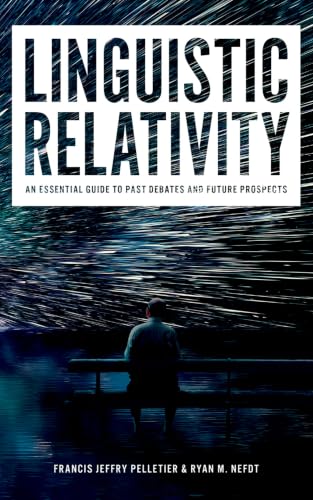
Abstract Does your language distinguish between dark and light blues? Do your verbs require a report on where and how you got your information? Can you easily talk about non-actual situations in your language? What does this mean for the way you see the world, if anything? Linguistic relativity, also known as Whorfianism by some, is actually a group of related positions that postulate that one’s native language generates some set of important directions or limitations on one’s cognition. In its extreme form, it even suggests that languages can create distinct (and possibly incompatible) worldviews. Recent cross-linguistic experiments on subtle grammatical distinctions between colour words or the presence of subjunctive conditionals have reignited the once furious debate on just how much our languages can shape the way we see the world. This book traces the development of the concept of linguistic relativity through the centuries, paying particular attention to Benjamin Whorf and the evidence for or against the various claims he made in this realm. We follow that with the application of linguistic relativity to modern attempts to verify it, as well as to certain social and intellectual endeavours that are prominent in the current philosophic, linguistic, and cognitive science literature.

Source: crossref · first seen 2026-11-24

Similar new books

not in your library