Books
arrow_backBack

Already on your shelf

5 similar books you own: read these first?

Editions & prices

FormatISBNPublisher price
Ebook 9780198940654 —
Print 9780198939047 —

About this book

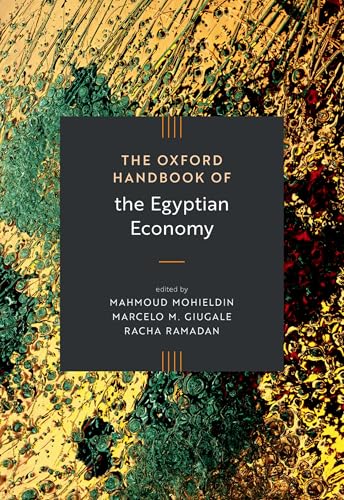
Abstract This Handbook offers a comprehensive and timely analysis of Egypt’s development trajectory, aiming to inform forward-looking policies grounded in evidence and multidimensional research. At its core lies one guiding question: What would it take to unlock Egypt’s full development potential in a way that is more inclusive, sustainable, and resilient to future shocks? The book brings together contributions from 69 leading experts, researchers, and practitioners across disciplines to examine the key levers shaping Egypt’s economic and social outcomes. Structured into 6 thematic parts and comprising 43 chapters, the Handbook delves into the country’s macroeconomic fundamentals, sectoral reforms, environmental challenges, and human development priorities. Topics include drivers of growth, fiscal and monetary policies, inflation dynamics, public investment, competition policy, and Egypt’s global economic relations. The book explores labor markets, education, gender equality, poverty and inequality, social protection, malnutrition, spatial dimension of development, noncommunicable diseases, demographic dividend, and environmental and climate-related issues. The final section examines governance, social capital, and the megatrends shaping Egypt’s long-term future. The Handbook provides a comprehensive, in-depth analysis of the Egyptian economy over the past seven decades, during which the country has lived through major shifts in the way it has pursued economic development. It provides diagnoses and highlights policy solutions for some of the most entrenched economic problems Egyptians are facing, with a view to building an action-oriented agenda and, ultimately, a different future. The Handbook is intended for academic researchers, students, development practitioners, and all those interested in understanding Egypt’s path toward sustainable development.

Source: crossref · first seen 2026-11-24

Similar new books

not in your library