Books
arrow_backBack

Already on your shelf

5 similar books you own: read these first?

Editions & prices

FormatISBNPublisher price
Ebook 9780198948735 —
Print 9780198948704 —

About this book

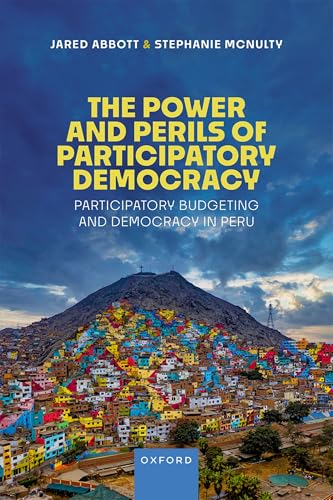
Abstract The book explores participatory democratic institutions’ effect on the quality of democracy and, in turn, how citizens feel about the state of democracy. It tests their effects using data from Peru, a country that simultaneously has one of the most successful participatory democratic systems in the world and one of the most fragile democracies in Latin America. Part One evaluates participatory institutions’ (PIs) potential for improving three aspects of the quality of democracy: accountability, participation, and responsiveness. It demonstrates that participatory institutions can improve several aspects of democracy in this unlikely case, then explains the power of PIs as the result of information sharing that takes place over time due to a legal framework that is implemented by the Ministry of Economy and Finance. Part Two of the book examines the inherent paradox of a nation with widespread PIs in subnational governments and weak national democratic system. A range of implementation failures and design flaws, in addition to several larger structural political and social factors, have substantially muted, if not negated PIs’ utility as a tool for strengthening Peruvian democracy at the national level. The book employs original quantitative and qualitative data that have been gathered over twenty years to undertake the first mixed-method, longitudinal analysis of government-mandated PIs in a country that has carried out the process across all subnational governments over a sustained period. As such, the book makes many contributions to our understanding of local government, local development, participatory democracy, citizen engagement, and the quality of democracy.

Source: crossref · first seen 2026-11-24

Similar new books

not in your library