Books
arrow_backBack

Already on your shelf

5 similar books you own: read these first?

Editions & prices

FormatISBNPublisher price
Ebook 9780198993803 —
Print 9780198993810 —

About this book

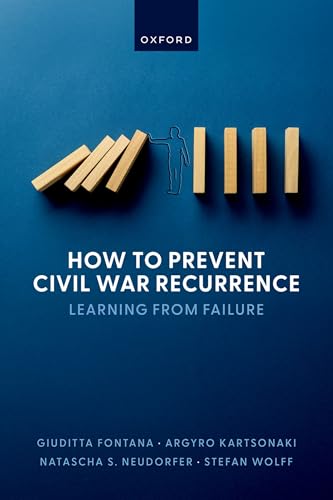
Abstract Civil wars remain the most frequent form of political violence worldwide. Despite sustained efforts to end them through negotiations, peace agreements often break down and widespread conflict-related violence resumes. This book explores whether and how civil war recurrence can be prevented. It examines the full course of peace processes that experienced conflict recurrence―often multiple times―before ultimately achieving the end of large-scale conflict-related violence. We use our innovative Multi-Stage Mixed Methods Framework, which sequences machine learning, inferential statistical analysis, practitioner engagement and congruence analysis, to identify the factors that may help break the cycle of recurring civil war in fourteen protracted peace processes, test them on a global dataset of political agreements concluded between 1989 and 2016, and examine their impact on the protracted peace processes in Bangsamoro, Burundi, Côte d’Ivoire, Liberia, and Sierra Leone. Through a complexity-informed theoretical lens, we demonstrate that the context-sensitive crafting of peace agreements, the committed international leadership of peace processes, and the adaptive implementation of the components of peace settlements in cooperation with grassroots actors can mitigate the risk of civil war recurrence. In particular, we find robust evidence that UN leadership of peace processes and the incorporation of provisions to include women in post-conflict society substantially increase the probability of a stable end to conflict-related violence. Plural justice provisions can help prevent civil war recurrence where the local population confers legitimacy to customary or religious structures.

Source: crossref · first seen 2026-11-24

Similar new books

not in your library