Books
arrow_backBack

Already on your shelf

5 similar books you own: read these first?

Editions & prices

FormatISBNPublisher price
Ebook 9780198948964 —
Print 9780198948933 —

About this book

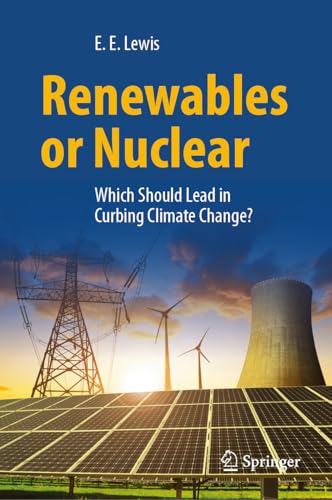
Abstract In industrially developed countries, energy is used for three things: maintaining a comfortable environment in buildings, transporting people and goods, and manufacturing products. Each accounts for about one third of total primary energy use. Controlling the indoor temperature accounts for most of the energy use by buildings, and strongly depends on the local climate. Electricity accounts for a high proportion of energy transfer in developed countries. The problem is that it can’t easily be stored, and not but that supply has to match demand. This makes the use of intermittent renewables such as solar and wind particularly challenging. Transportation efficiency can be measured by the energy used to move a person or a tonne of freight a given distance, but there’s also the journey time to consider. Transportation, with the exception of trains, is constrained by the energy density and convenience of fuels, and in this it is hard to beat liquid hydrocarbons. Materials that are dug out of the earth are nearly always oxides, but we want the element itself. The reduction process inevitably uses energy and produces carbon dioxide. Even growing crops requires energy in addition to that provided by sunlight. A meat-based diet requires significantly higher energy inputs than a vegetarian diet. Growing crops for fuel is a poor use of land, the problem being that crops don’t grow fast enough. Ultimately, policy should be based on what works from a physics and engineering viewpoint, not on legislation that mandates use of favoured renewable energy sources.

Source: crossref · first seen 2026-11-24

Similar new books

not in your library