Books
arrow_backBack

Already on your shelf

5 similar books you own: read these first?

Editions & prices

FormatISBNPublisher price
Ebook 9780197786390 —
Print 9780197786369 —

About this book

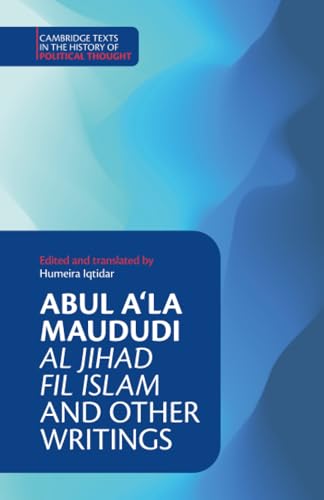
Abstract This book offers a detailed exposition of the theory of maqasid in its first thirteen chapters, whereas the balance of the book expounds the application of maqasid to a number of selected subjects of contemporary concern to human life and welfare. This can be said to be the main contribution of this book, namely to move the maqasid discourse from its theoretical preoccupations in the works of Muslim jurists of the past to real-life subjects of concern to human welfare. We have thus taken the novel step, also suggested by Ibn Taymiyyah (d. 728/1328) but not activated, to expand the scope of the maqasid from its traditional list of five essentials (daruriyyat) on the protection of religion, life, reason, progeny, and property to an extended number of subjects including human dignity, good governance, environmental care, peace and security, women’s rights, science and technology, sustainability, human capital development, protection of minorities, the middle path of moderation (wasatiyyah), and so on. Since the Shariah itself is not confined to any particular number, the purposes of Shariah should also not be so confined and remain open to evolution in line with society’s changing conditions. We also explore ways as to how the resources of maqasid can be utilized to protect and promote all that is important to human life and welfare. There is general consensus that human welfare is the supreme objective of Shariah, yet it is ironic that the leading schools and scholars of fiqh neglected the maqasid during the first five centuries of Islam and remained focused on expatiating the Usul al-Fiqh, the sources of Islamic law such as general consensus (ijma‘), analogy (qiyas), and juristic preference (istihsan), until ‘Izzuddin Abd al_Salam (d. 660/1262), Ibrahim al-Shatibi (d. 790/1388), and others recognized the maqasid as a distinctive chapter of the Shariah. Yet the maqasid still remained underdeveloped until the closing decades of twentieth century, when it became the focus of renewed attention. Scholarly contributions to maqasid accelerated since then through conferences and seminars, university courses, journal studies, and books. Yet much of the discourse on maqasid remained preoccupied with theoretical expositions mainly because the fiqh blueprint on maqasid had historically remained theoretical. For instance, Islamic banking and finance pundits in Malaysia and elsewhere spoke of the application of maqasid in the early years of the present century, but banking staff did not know what to make of the protection of religion, life, and property in their banking operations mainly because the maqasid lacked a methodology of implementation. This book reviews and enhances the theory of maqasid and then focuses on its application to a carefully selected subject of contemporary concern to human welfare interests.

Source: crossref · first seen 2026-11-24

Similar new books

not in your library