Books
arrow_backBack

Already on your shelf

5 similar books you own: read these first?

Editions & prices

FormatISBNPublisher price
Ebook 9780198912033 —
Print 9780198912002 —

About this book

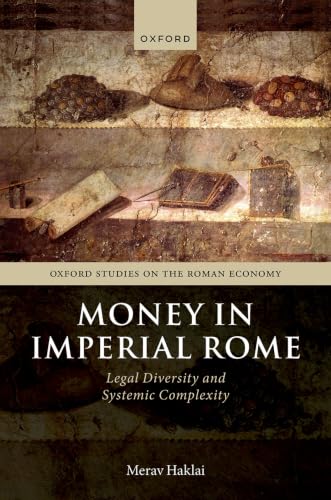
Abstract This book examines the institutional framework of money as an economic agent in imperial Rome, emphasizing its systemic complexity. Analyses focus on Roman law as reflected in the writings of Roman jurists from the second and early third centuries ad. Roman legal sources are supplemented with documentary materials, mainly papyri but also inscriptions, and with contemporary Jewish legal sources. The book promotes Keynesian claims for the endogenous nature of money and adopts approaches advanced by New Institutional Economics, while its innovative contribution is in its complexity-oriented approach to understanding the conceptual framework that dictated the use of money in private transactions. The first part of the book is introductory. The second part traces a line of thought consistent in legal developments that regulated exchange, which perceived money as a unique phenomenon. This is detectable for price (pretium) in the Roman contract for sale (emptio venditio), remuneration (merces) in the Roman contract for lease and hire (locatio conductio), and Jewish legal rules regarding sales conducted via ‘acquisition by drawing’ (qinyan meshikha). The third part examines money as a financial tool. It observes the innovative ways Romans used the instrument of interest; regulations regarding interest-bearing deposits in three legal traditions operating under Roman regime: Roman, Jewish, and Egyptian–Hellenistic laws; and the capacity of credit money to increase the Roman money supply. The fourth part offers a summary and some conclusions.

Source: crossref · first seen 2026-11-24

Similar new books

not in your library