Books
arrow_backBack

Already on your shelf

5 similar books you own: read these first?

Editions & prices

FormatISBNPublisher price
Ebook 9780191999093 —
Print 9780198897873 —

About this book

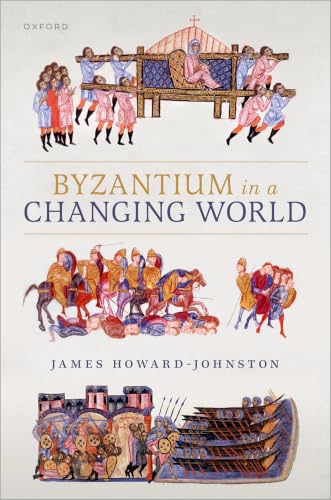
Abstract Byzantium is commonly taken to be a somewhat exotic entity on the margin of medieval Europe—bureaucratic, Greek- rather than Latin-speaking, Orthodox rather than Catholic, wealthy and effete, relying on cunning rather than martial exploits to foil its enemies. It is viewed from the inside out and from the top down, since the great majority of primary sources emanate from the capital. Hence court intrigues, trouble from unruly churchmen, putsches, and civil wars loom large. A very different line is taken in this book. Byzantium and its east Roman predecessor are viewed from the outside, as they cope with all manner of external threats. Attention is paid to those threats, above all to that posed by the Arabs after they destroyed the ancient world order in the seventh century. The story is basically that of a state which managed to preserve its ideology, its culture, its religion, and its fundamental structures as it was battered from without. The central theses are that it was militarized and ruralized, and that it owed its survival and subsequent revival in the seventh to tenth centuries to a guerrilla style of warfare combined with well-targeted diplomatic activity. It is a political history, which begins in late antiquity and takes the story on from Byzantium’s heyday in the first half of the eleventh century through its long-drawn-out decline to the fall of Constantinople in 1453. Readers are referred to its companion volume, Byzantium: Economy, Society, Institutions 600–1100 (Oxford, 2024), for analyses of Byzantium’s structural features.

Source: crossref · first seen 2026-11-24

Similar new books

not in your library