Books
arrow_backBack

Already on your shelf

5 similar books you own: read these first?

Editions & prices

FormatISBNPublisher price
Ebook 9780197799697 —
Print 9780197799666 —

About this book

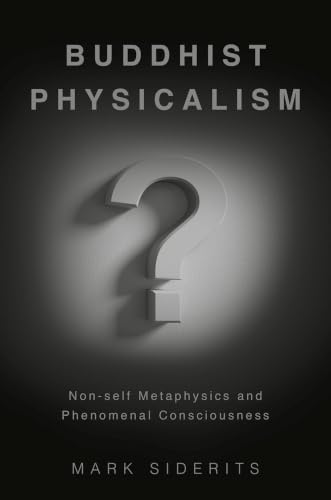
Abstract Indian Buddhist philosophers uniformly rejected physicalism, the view that everything is physical in nature, in favor of either a dualist or an idealist ontology. This work explores the question of whether this stance can be justified in light of our current understanding of the natural world and our place in it. Might physicalism be compatible with Buddhism? It explores the justification for the core Buddhist thesis of non-self and discusses the resulting constraints on our ultimate ontology. Buddhist commitment to the non-existence of a self means that consciousness must be understood to be subjectless. This consequence, taken in conjunction with Buddhist arguments for mereological nihilism, leads to considerable difficulties in explaining how cognitions might be among the ultimate constituents of reality. An alternative view, first developed by non-Buddhist Indian philosophers, has it that consciousness is something postulated by a theory that helps us predict bodily and verbal behavior. This opens the door to the thesis known today as illusionism, that phenomenal consciousness is illusory (and hence does not pose a threat to physicalism). Support for this alternative conception of consciousness is drawn from current empirical research in developmental psychology and cognitive science. Using resources drawn from both the Buddhist philosophical tradition and current work in philosophy of mind, the work then sketches a proposed solution to the “hard problem” for physicalism, the problem of explaining how phenomenal consciousness might be illusory. It then returns to the question of the compatibility of the resulting view with Buddhist philosophical and soteriological commitments.

Source: crossref · first seen 2026-11-24

Similar new books

not in your library