Books
arrow_backBack

Already on your shelf

5 similar books you own: read these first?

Editions & prices

FormatISBNPublisher price
Ebook 9780191999239 —
Print 9780198898146 —

About this book

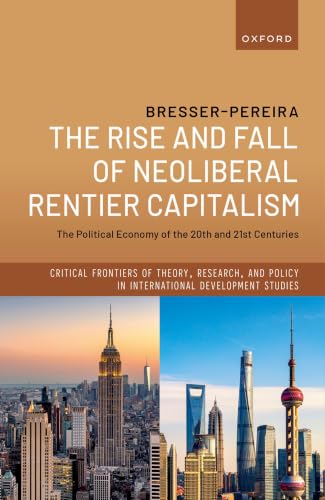
Abstract This book discusses the political economy of 20th- and 21st-century capitalism. It starts from the Second Industrial Revolution, which allowed room for the rise of the managerial class and adoption by the rich countries of universal suffrage around 1900, which defined the time to come as the time of democracy. The book follows the political economy rather than the economics of a new theoretical framework that the author and a group of other academics have been developing since the 2000s, termed New Developmentalism. It suggests that there are two forms of economic coordination of capitalism: economic liberalism, leaving resource allocation to the market, and developmentalism, which involves moderate intervention of the state in the economy and a national perspective. The author uses the word ‘developmentalism’ because there is no established word to mean the alternative to economic liberalism. The book describes four phases of capitalist development: the mercantilist, the liberal-industrial, the capitalist-managerial, and the neoliberal rentier-financier phases. While the capitalist-managerial phase was progressive, developmental, and social-democratic, the rentier-financier coalition was narrow—a regressive phase dominated by radical neoliberal ideology. For the author, the rise of national right-wing populism doesn’t represent a crisis of democracy, which is threatened but strong; the crisis rather reflects the recent collapse of neoliberalism and the rise of a conservative developmentalism. The phase that is now beginning is not a capitalist-managerial but a managerial-capitalist phase because the major partner in the coalition is ceasing to be the capitalist and becoming the managerial class.

Source: crossref · first seen 2026-11-24

Similar new books

not in your library