Books
arrow_backBack

Already on your shelf

5 similar books you own: read these first?

Editions & prices

FormatISBNPublisher price
Ebook 9780198913825 —
Print 9780198913818 —

About this book

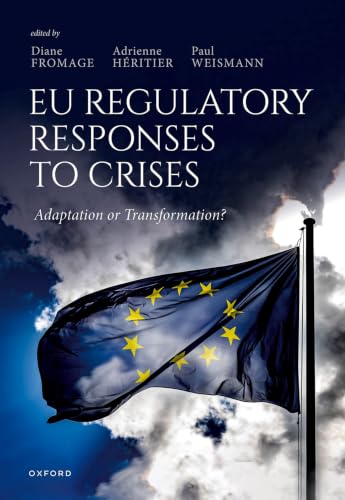
Abstract The past years have seen a number of crises, for example the Great Financial Crisis, the migration crisis, and the COVID-19 pandemic. At the EU level, these crises have strongly affected the following fields: Economic and Monetary Union, financial regulation and supervision, health policy, state aid, energy policy, migration policy, and foreign and defence policy. As a reaction to these crises, EU rule-making in these fields has developed in various ways. These changes—essentially brought about only on the basis of secondary law—have had an institutional dimension; that is, they have concerned the actors involved in rule-making. Beyond that, the changes have also affected the shape or nature of the rules—such as the increasing use of non-binding rules (‘soft law’)—and the process of rule-making as such. Further dimensions of this change concern the cooperation with national bodies. Additionally, the substance of existing rules (including primary law) has been reconsidered, as a result of unprecedented challenges. In this vein, there has been a deviation in practice from the Dublin system as regards the distribution of refugees, and the EU has indebted itself on a considerable scale in the wake of the pandemic. This book provides an account of these developments with regard to each of the above policy fields, as well as in a horizontal perspective. Thereby, in a perspective combining legal and political science expertise, a comprehensive picture is drawn of the EU’s regulatory crisis toolkit and its enrichment and refinement in reaction to new challenges.

Source: crossref · first seen 2026-11-24

Similar new books

not in your library

More by Diane Fromage